Summaraizer.com
Turn your documents into interactive conversations
Average API response time for summaries.
Documents processed in the first quarter post-launch.
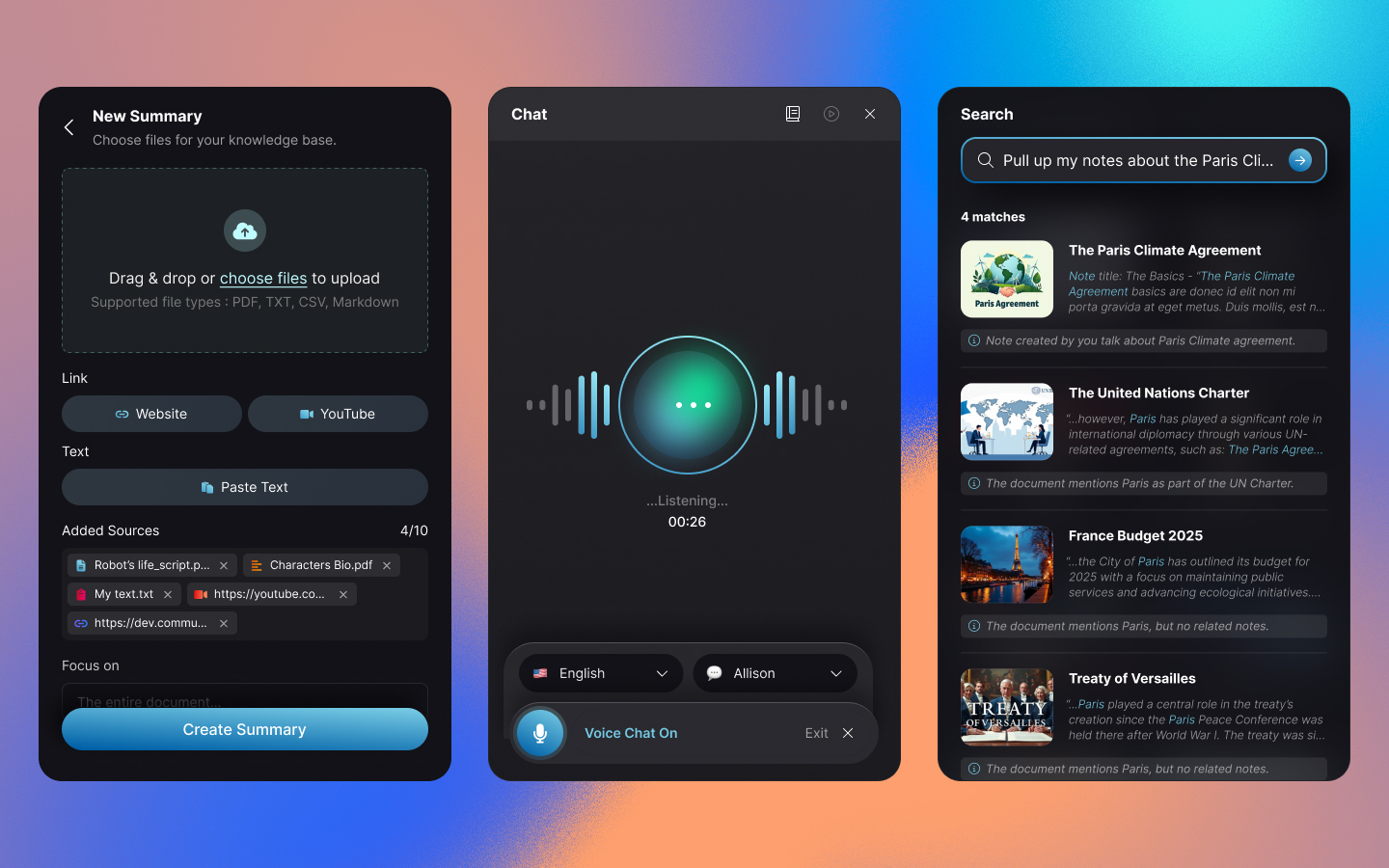
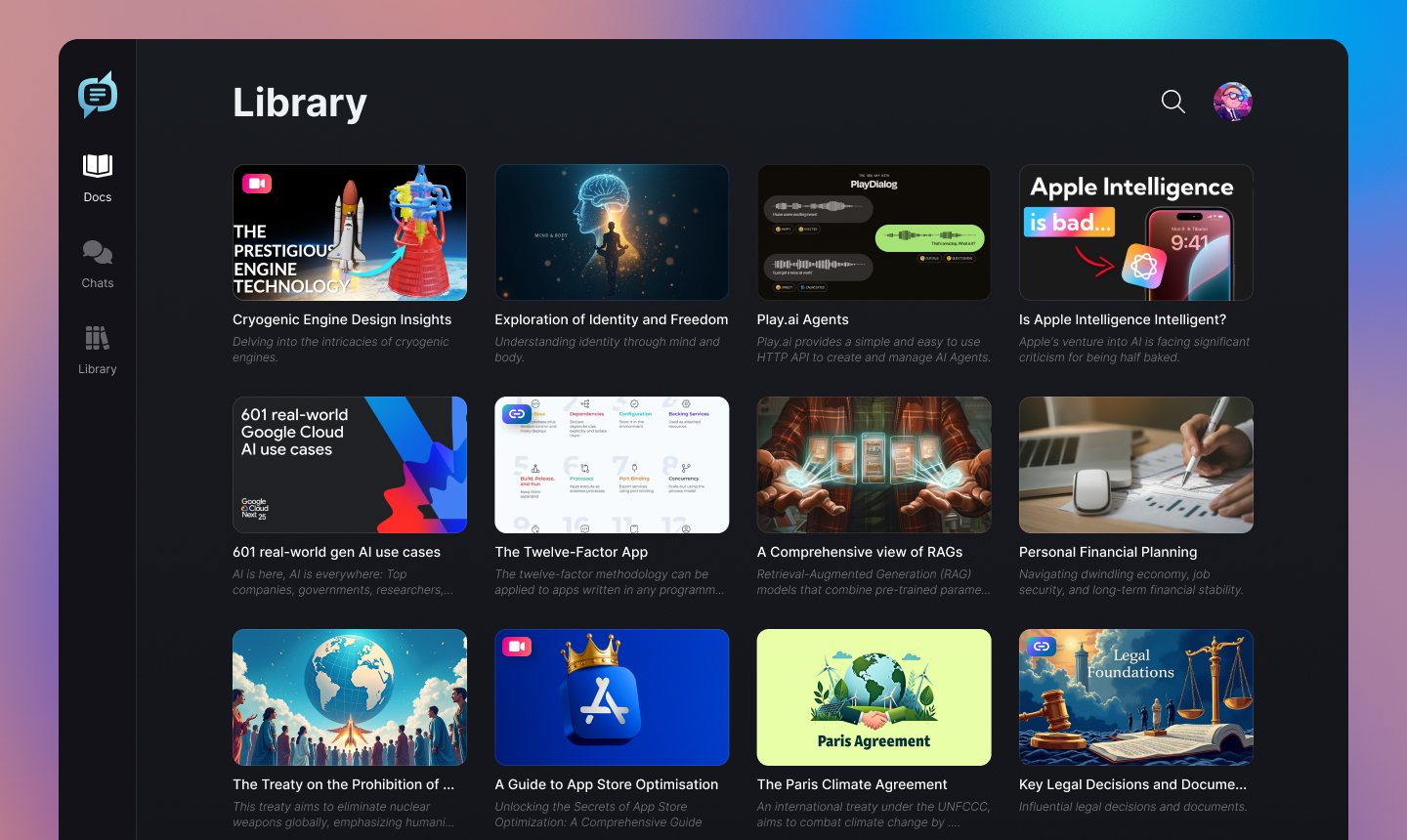
Summarizer.com transforms complex documents into clear, actionable insights in seconds. From legal contracts to research papers, it makes content interactive and queryable, giving users back their most valuable asset: time.
The backend that powers this experience was preceded by a structured technology audit — evaluating candidate AI models for summarization and question-answering against speed, cost, and accuracy — before a scalable, serverless-first infrastructure was built around the models that won.
The global productivity software market is projected to reach $102 billion by 2027. Within this, AI-powered tools are the fastest-growing segment, as users seek intelligent solutions to manage their workflow and combat burnout.
Once niche, AI assistants are now mainstream. Yet, many summarization tools are clunky, inaccurate, or buried within complex platforms. None have perfected the blend of speed, accuracy, and beautiful design.
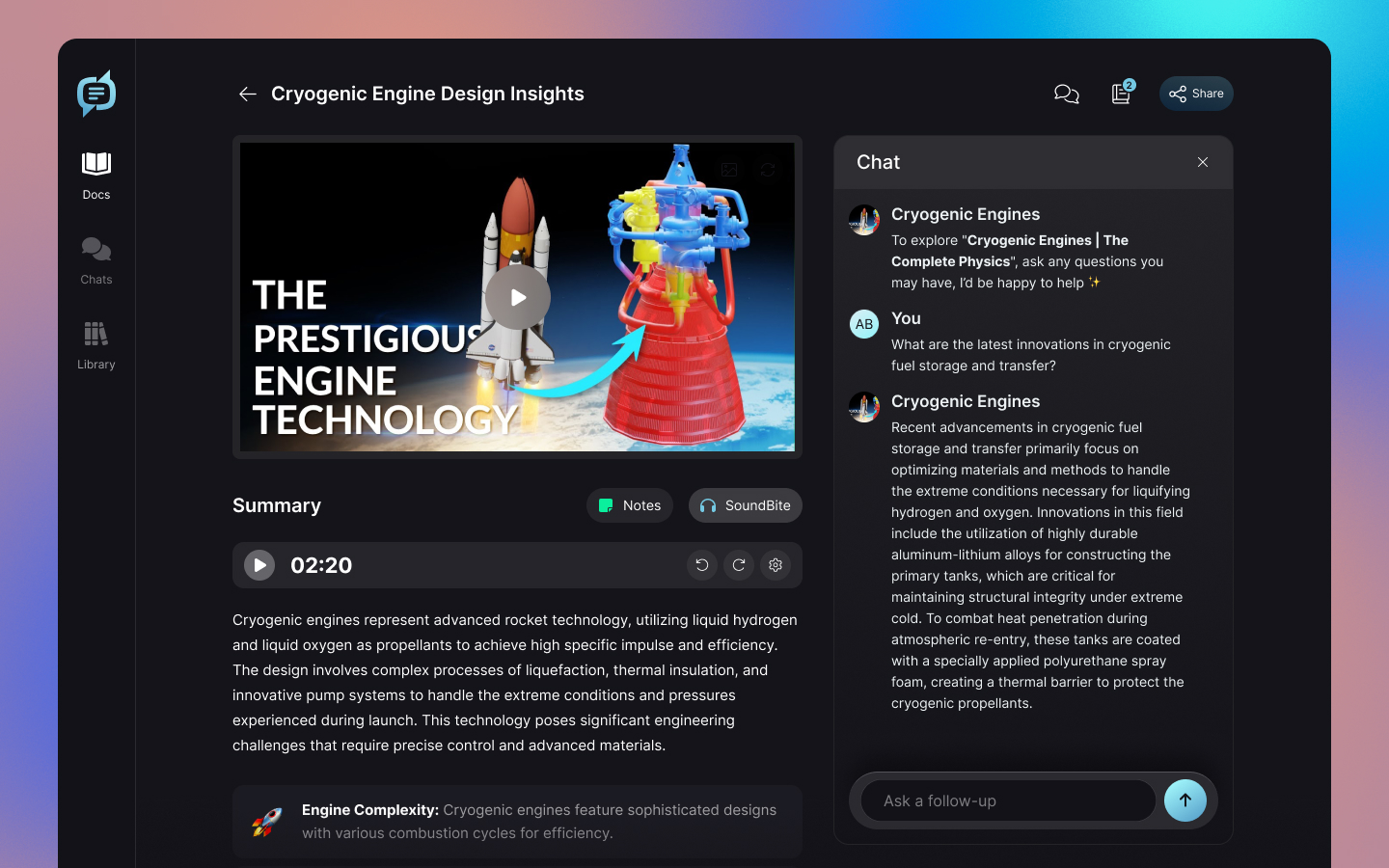
Whether it's a video, a book, or a research paper, Summarizer.com makes learning effortless.
The Model Evaluation Audit
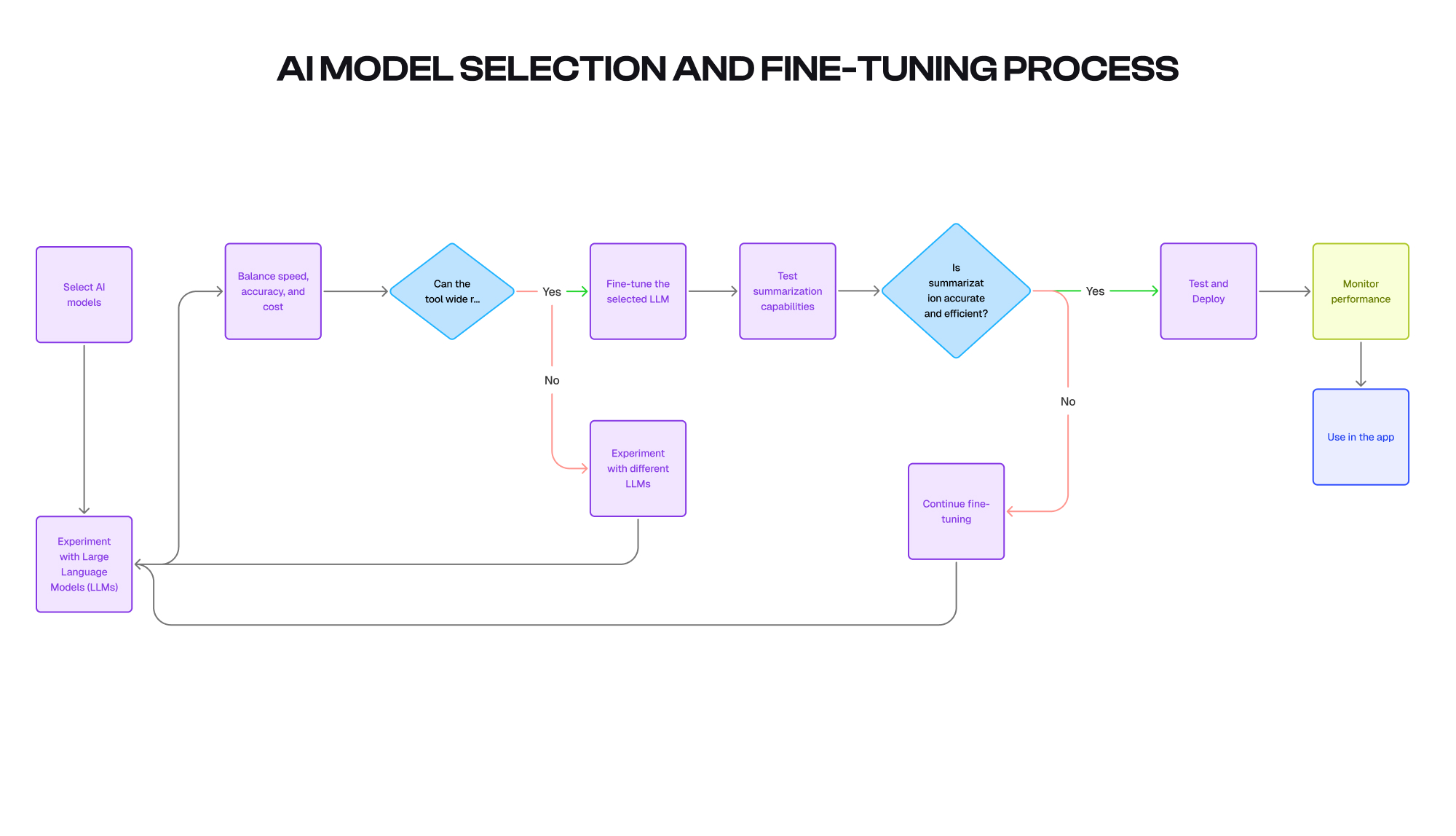
Before writing the routing logic, the candidate AI models for summarization and question-answering were evaluated head-to-head on speed, accuracy, and cost across document types and sizes. That audit is what produced the routing rule the system runs on: smaller files are summarized rapidly by lighter models like Gemini, while larger, denser documents are routed to advanced RAG pipelines that trade some speed for accuracy where it matters.
From Hours to Seconds: The Engineering Behind Instant Insights
Making AI analysis feel instantaneous required a hybrid backend architecture: some components run as serverless functions for elastic scalability, others on traditional infrastructure for predictable-load workloads. Combined with asynchronous processing, this lets the system handle large documents without freezing the user's interface.
Building an AI Brain: How We Taught Summarizer to 'Understand'
The backend workflow intelligently routes documents based on size and token count to the model selected by the evaluation audit — balancing speed and accuracy rather than optimizing for either alone.

"Manu's thinking starts where other developers' work ends. The process was a masterclass in product design. It resulted in a high-tech, sophisticated, and intelligently beautiful product."
Gabe Cowen
CEO, Makr.ai