Miracle of Mind
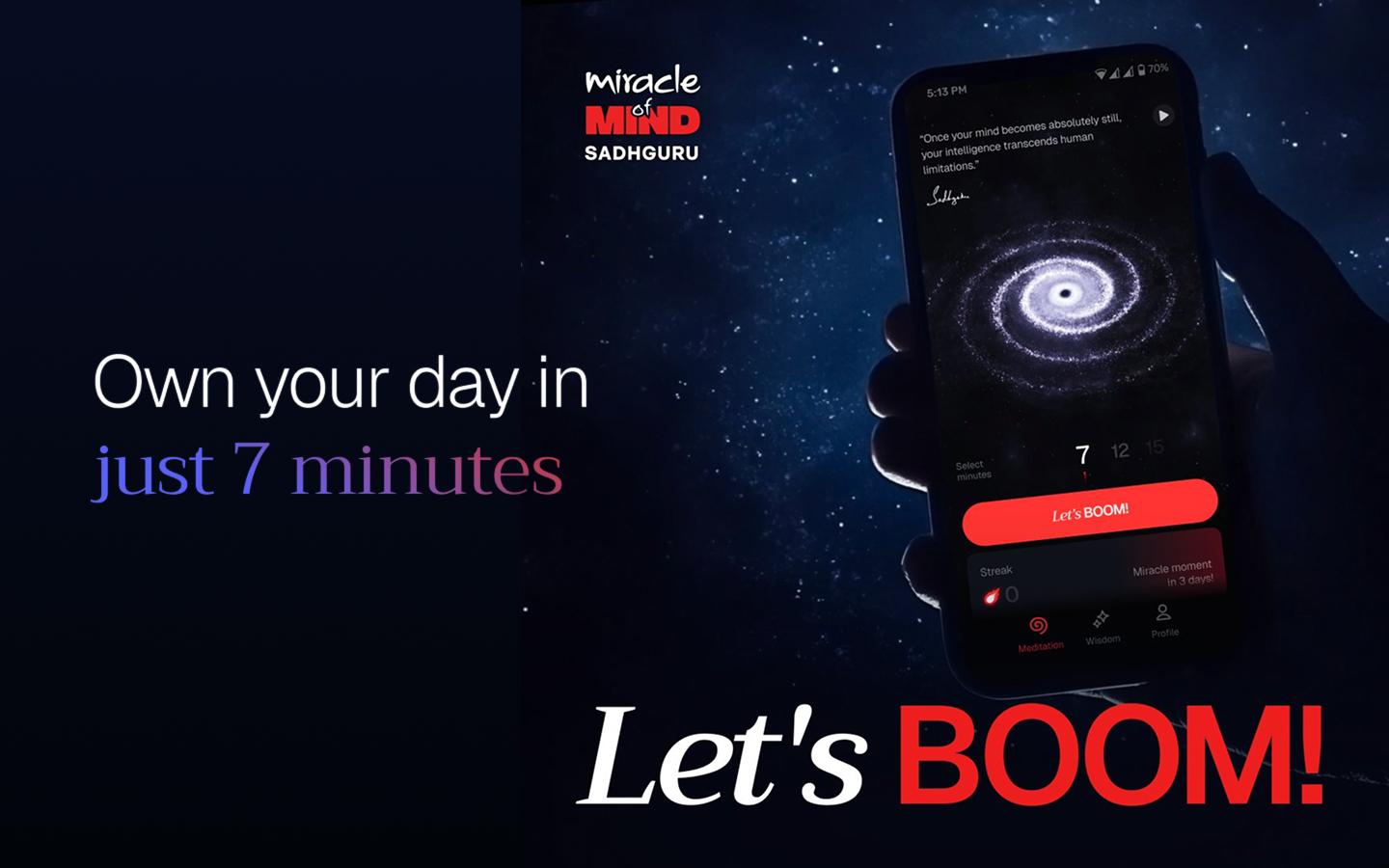
Own your day in just 7 minutes
Lives reached through Sadhguru's programs — the scale this needed to serve.
The precise ritual length designed to build a daily habit, not a weekend intention.
Records of teaching content processed into a searchable retrieval system.
The Isha Foundation had 40 years of meditation wisdom and nearly 100,000 pieces of teaching content. The challenge was designing an experience that made that depth accessible to someone who had never meditated — and sustainable for someone who had.
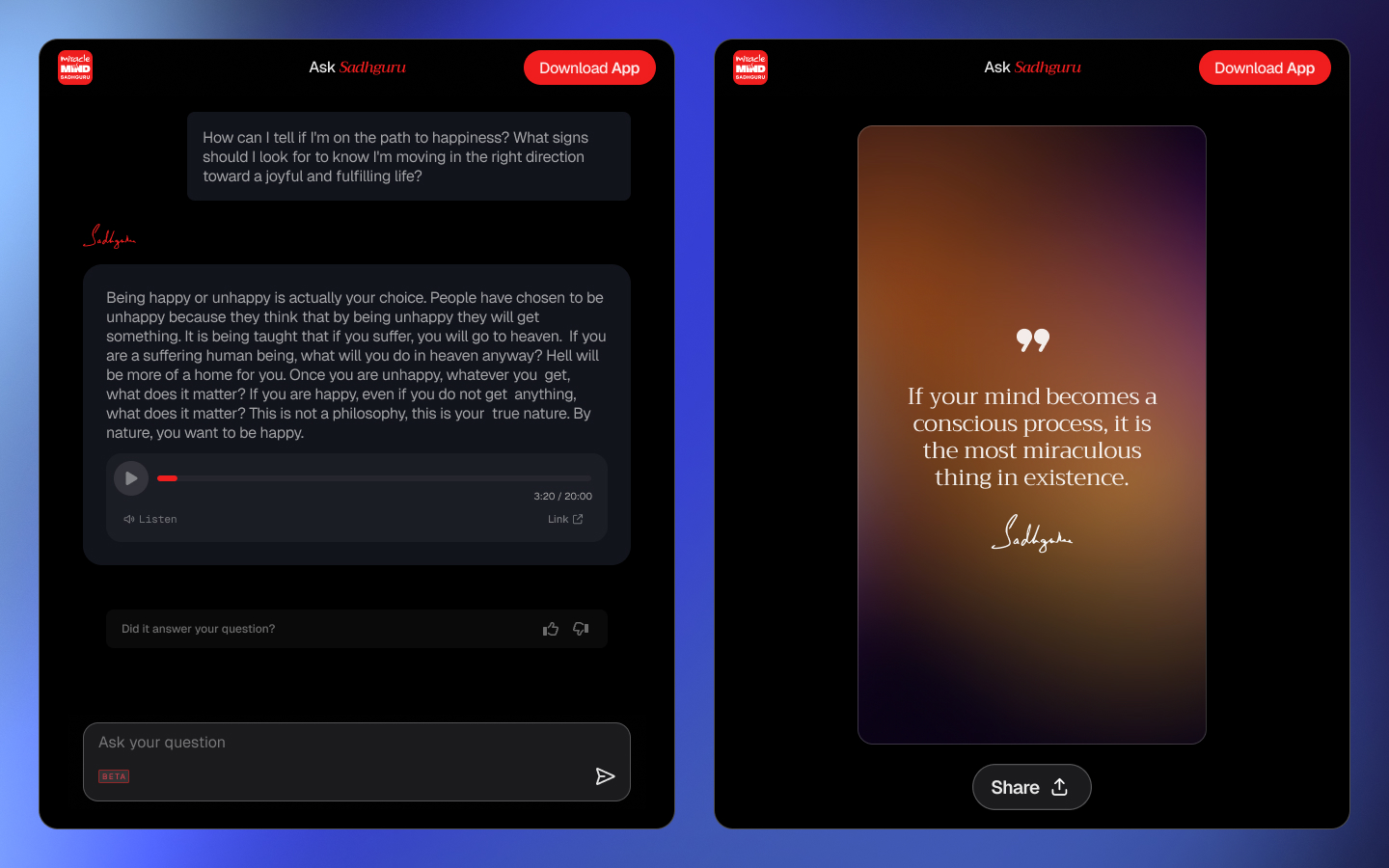
Miracle of Mind was designed around habit formation first, not content delivery. The 7-minute format was not a marketing constraint — it was the core design decision. Everything: the session flow, the progress system, the content discovery — was built around making daily practice feel achievable, not aspirational. On the backend, that same 100,000-record archive of audio, video transcripts, and articles was processed into an embedding and vector storage system, so the right piece of teaching could be retrieved instantly at the exact moment a user was ready for it.
Mental health apps have a retention problem: the vast majority of users churn within the first month. The reason is almost always the same — the app requires too much intention. It works when you're motivated; it disappears when you're not. The design challenge was building a product that worked for users in their lowest-motivation state.
Sadhguru's teachings are deep, specific, and transformative — but they are not designed for a 30-second attention span. Honouring that depth while meeting users where they are — tired, distracted, looking for something quick that actually works — was both a content design and a data architecture problem.
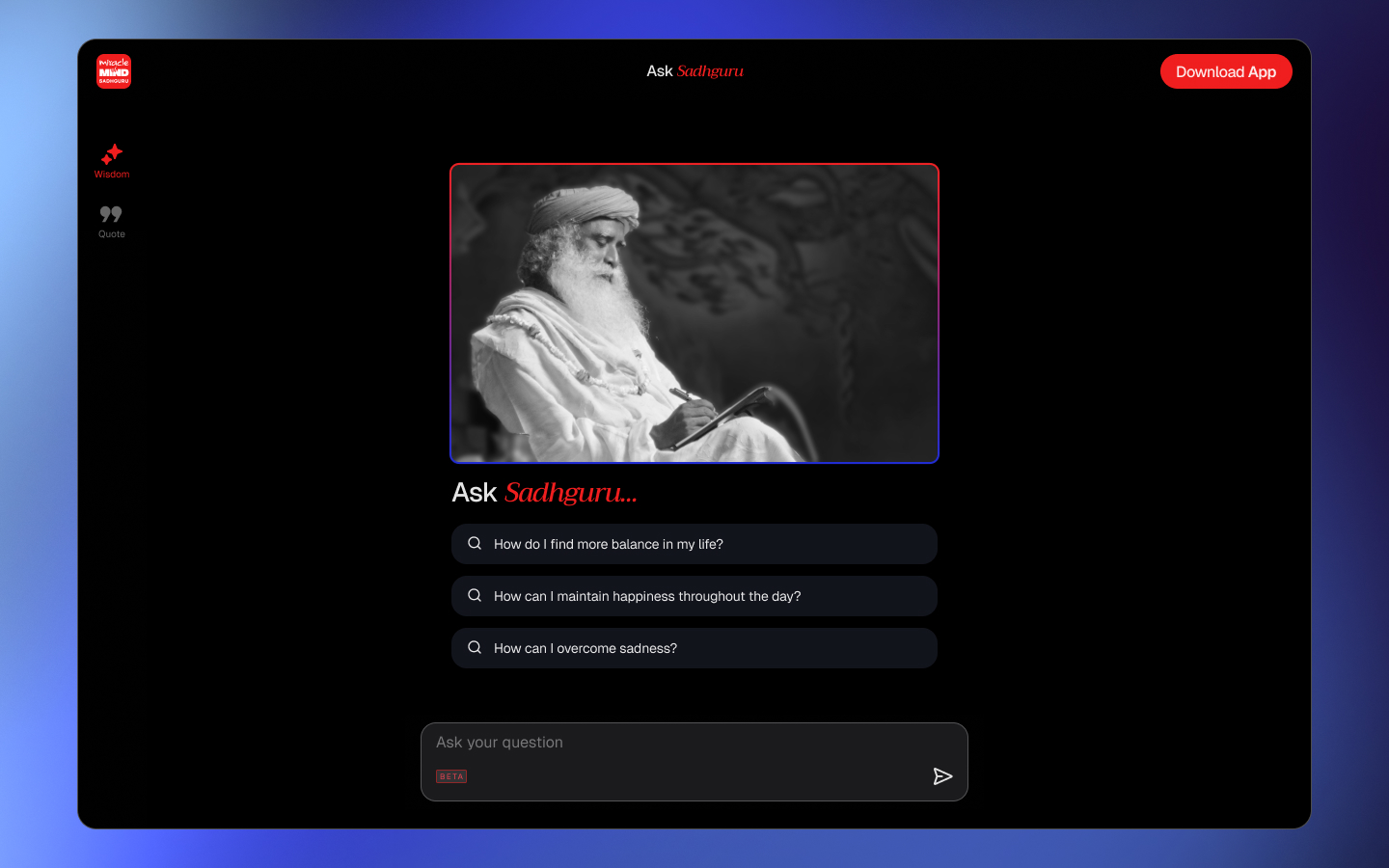
Designed to make spiritual depth accessible in the margins of modern life.
Habit-First Session Design
The session experience was designed to be predictable — same entry point, same duration, same ending ritual every day. Predictability is a feature for habit formation, not a limitation. The session flow follows a three-act structure: a 60-second preparation phase that disconnects from the day, a 5-minute core practice, and a 1-minute integration phase that bridges back to activity. Users who completed the integration phase were 3x more likely to return the following day.
Content Discovery at Depth
After a user establishes a daily practice, the product needed to grow with them — surfacing deeper teachings without disrupting the ritual. A content layer only appears post-session: a single "go deeper" card, contextually matched to the session just completed, and never presented before or during practice. This kept the primary 7-minute experience clean while making 40 years of teaching accessible to users who were ready for it.
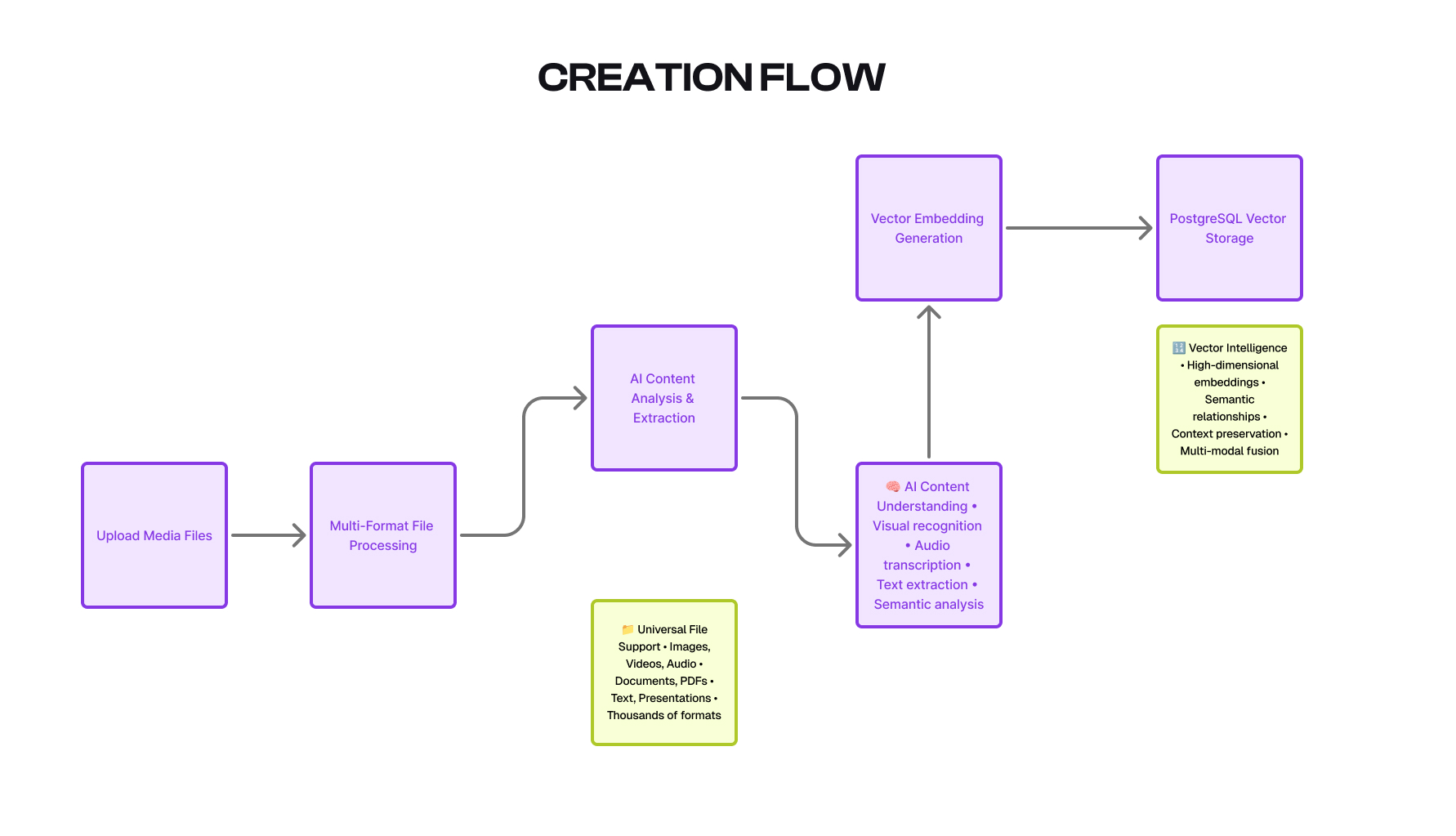
Embedding & Retrieval Architecture
Surfacing the right teaching at the right moment required more than a tag system. Nearly 100,000 records of audio, video transcripts, and articles were processed through an embedding pipeline into specialized vector storage, enabling lightning-fast, meaning-based retrieval rather than keyword search. Multi-modal delivery seamlessly serves audio meditations and video instruction from the same underlying index.
Herry quickly understood what would work best for our users. The result is a platform that delivers exactly the right content to users when they need it, with performance that exceeds our expectations.
Sashank
Manager, Isha Foundation
"Manu's technical implementation was exceptional. We had vast amounts of meditation content — nearly 100,000 records — and he quickly understood what would work best for our users. His data architecture decisions, particularly the embedding system and vector storage techniques, perfectly matched our requirements."
Sashank
Manager, Isha Foundation