Prompty
Create, manage, and share smarter prompts
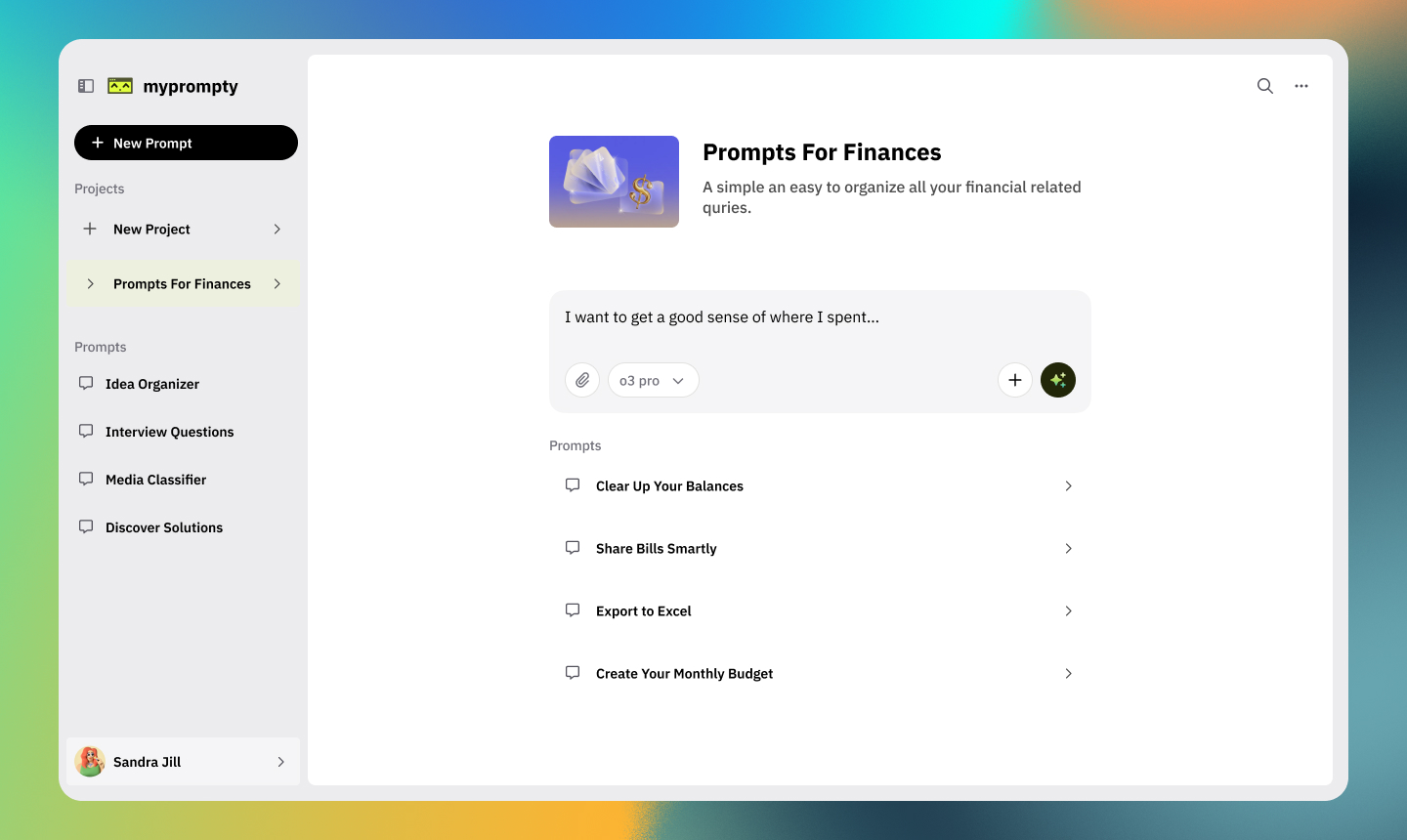
AI platforms — all handled by a single adaptive creation flow.
Prompts created, managed, and improved through the system.
Prompt engineering is a skill most AI users wish they didn't need. Prompty was designed to disappear that skill gap entirely — detecting the platform you're on, understanding what you're trying to do, and producing the optimal prompt without you having to think about it.
Design work covered the intent-to-prompt flow, the cross-platform context UI, and the template library architecture that makes 100k+ prompts findable by non-experts. Underneath it, the prompt engine itself was built to detect the active platform, parse user intent, and rewrite the prompt in real time — using platform APIs, DOM analysis, and keyword mapping rather than a static template swap.
Most people using AI tools get mediocre results — not because they lack intelligence, but because they lack vocabulary. Prompts are the interface between human intent and machine output, but nobody teaches you how to write them.
The market has thousands of "prompt libraries" — static collections of copy-paste text. Prompty was designed around a different insight: the best prompt isn't stored somewhere, it's generated from context. The design and engineering challenge was making that generation feel instant and effortless.
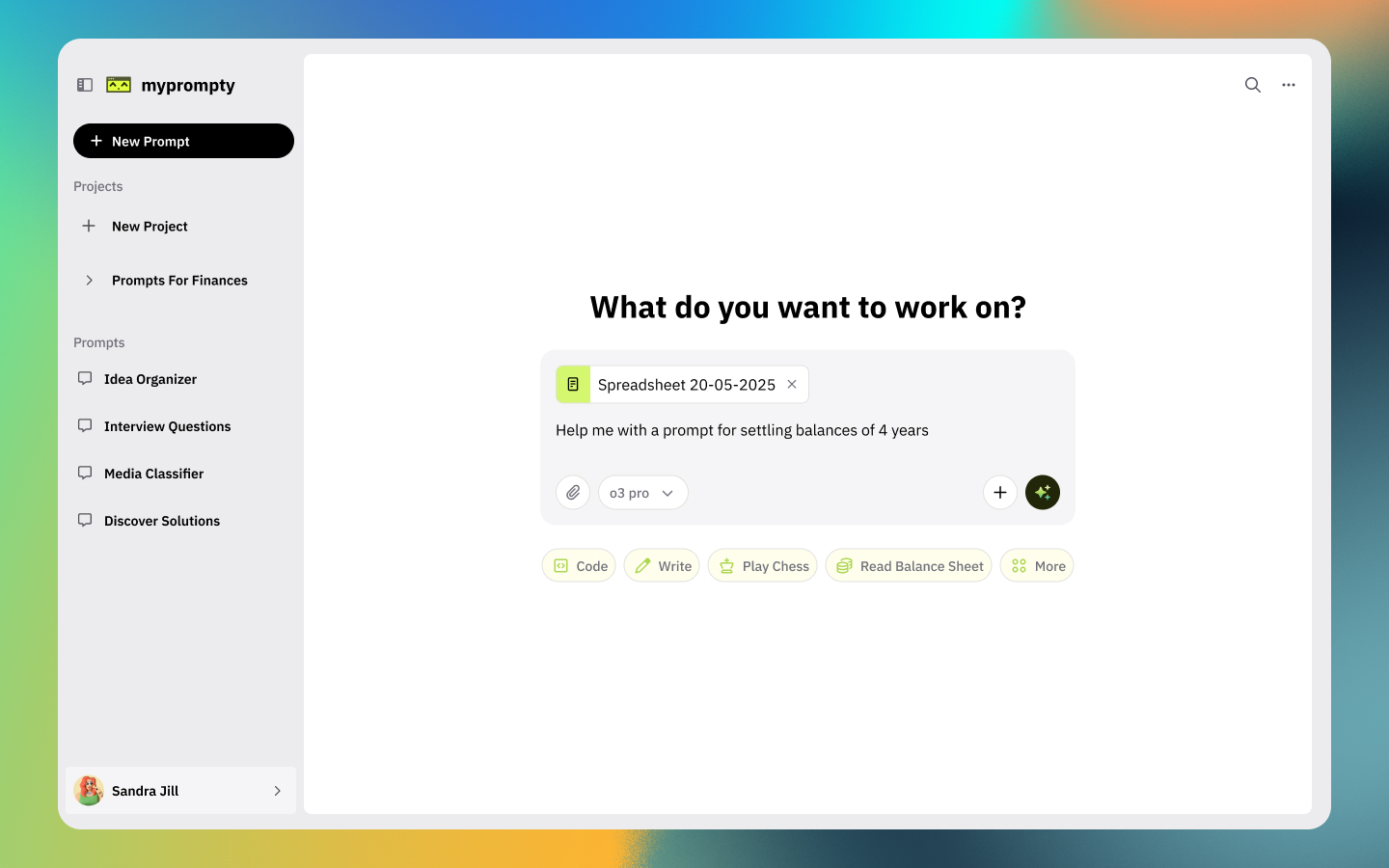
Designed for the browser, the web, and mobile — one creation experience everywhere.
From Intent to Optimised Prompt
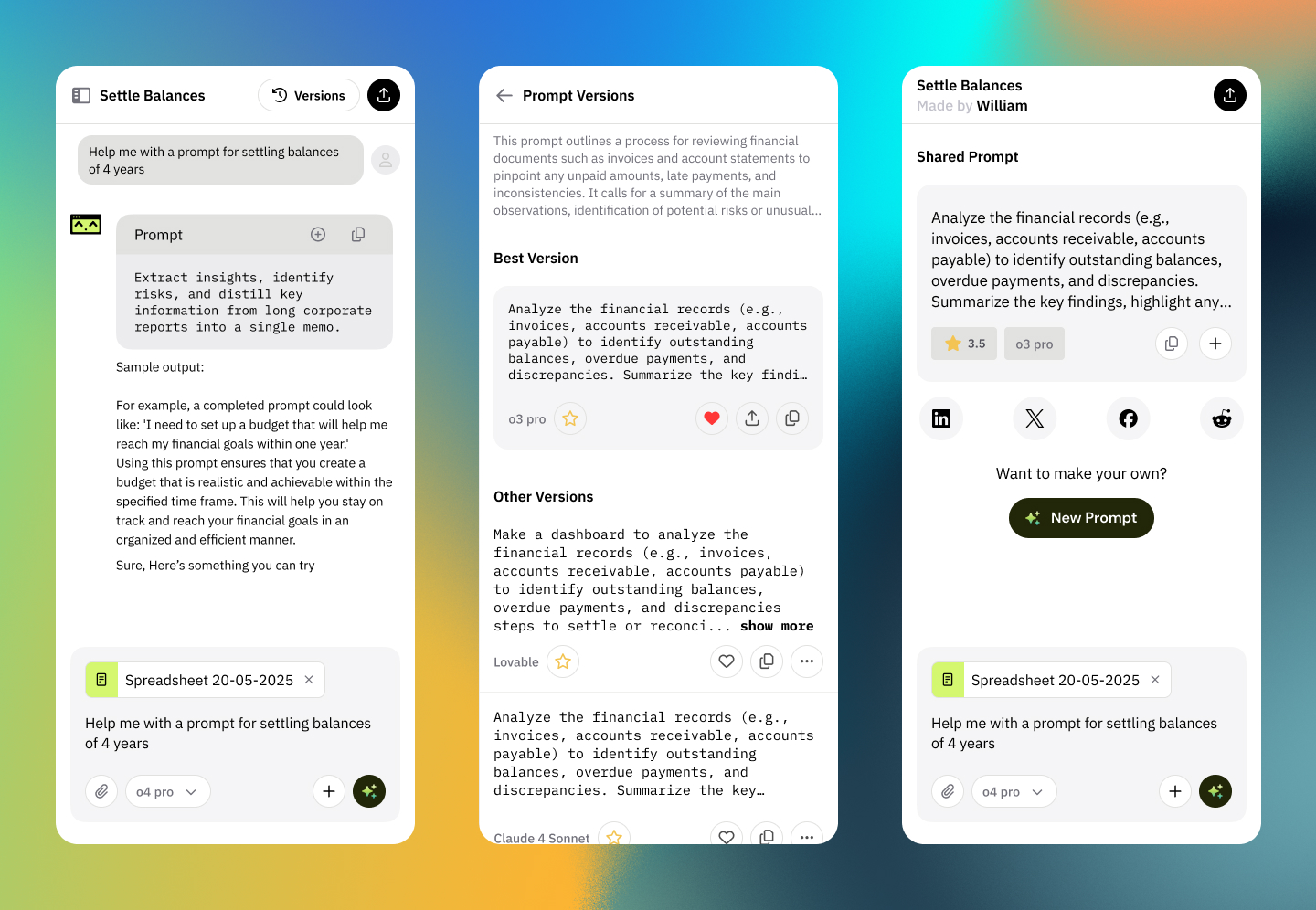
The core interaction is deceptively simple: the user types what they want to achieve, and Prompty produces the optimal prompt for the platform they're using. Behind that interaction: mapping 55+ platform vocabularies, a progressive disclosure flow that hides complexity until it's needed, and a feedback loop so users could see their prompt improve in real time. Twelve prototype tests ran before the creation flow felt inevitable.
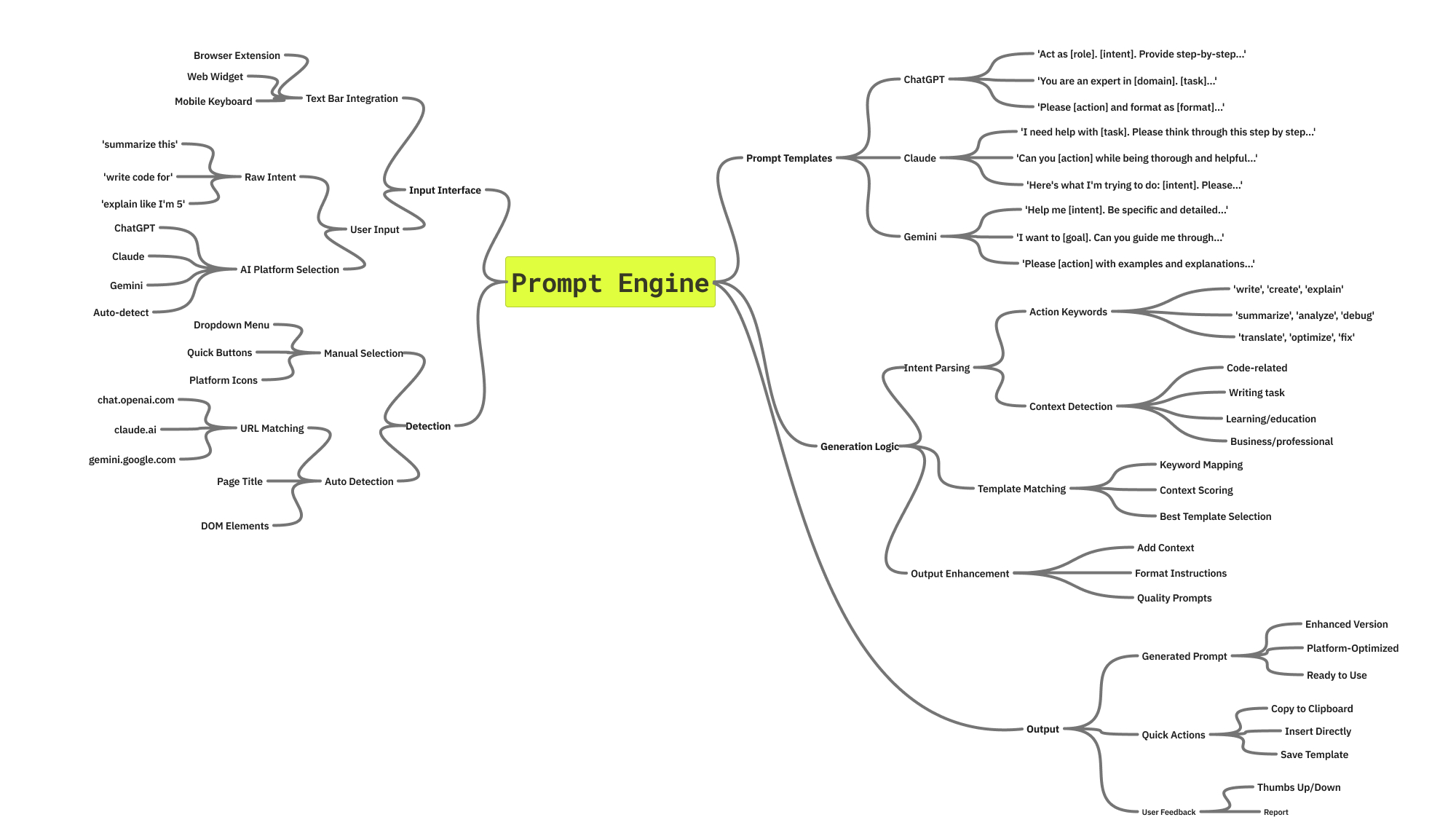
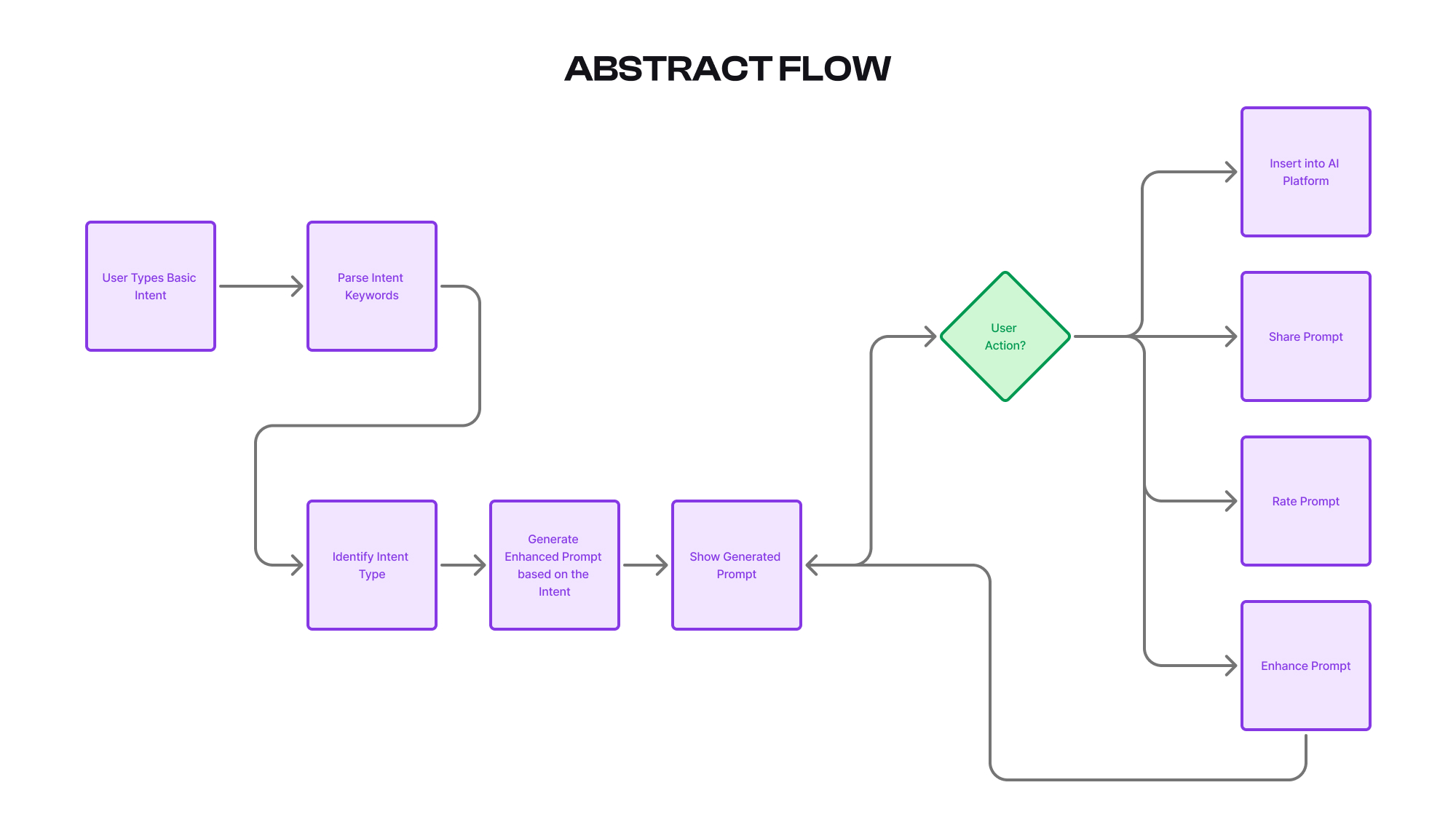
Cross-Platform Context Detection UI
When the browser extension activates, the user needs to know immediately which AI platform has been detected and how their prompt will be optimised differently. A compact detection panel communicates platform context, active template category, and enhancement mode in under two seconds — without interrupting the user's existing workflow. The visual language pulls from the host platform's own aesthetic so the extension feels native, not foreign.
The Prompt Engine
Detecting the platform and rewriting the prompt in real time runs on context detection, intent parsing, and template matching — combining platform APIs, DOM analysis, and keyword mapping to identify the user's environment automatically. The system continuously learns from user feedback to improve prompt quality and relevance over time. A library of 100k+ prompts is organised around use-case clusters, not platform categories, because users think in terms of "I want to write a cold email," not "I need a GPT-4 prompt."
Herry has been incredibly swift in implementing the ideas and did an amazing job. He made sure everything was set up exactly as needed, and it worked out perfectly. Awesome work.
Harpreet Singh
Product Owner, Prompty
"Manu has been incredibly swift in implementing the ideas and did an amazing job building the prompt engine from the ground up. He made sure everything was set up exactly as needed, and it worked out perfectly. Awesome work, dude!"
Harpreet Singh
Product Owner, Prompty