Kora
AI with a visual interface
Every AI response is an interactive, spatial experience — not a wall of text.
Pre-built agents that integrate into your life and work without configuration.
Every AI interface built so far has made the same mistake: it delivers text and calls it intelligence. Kora was designed around a different premise — that the way AI presents information should match the way the human mind actually processes it.
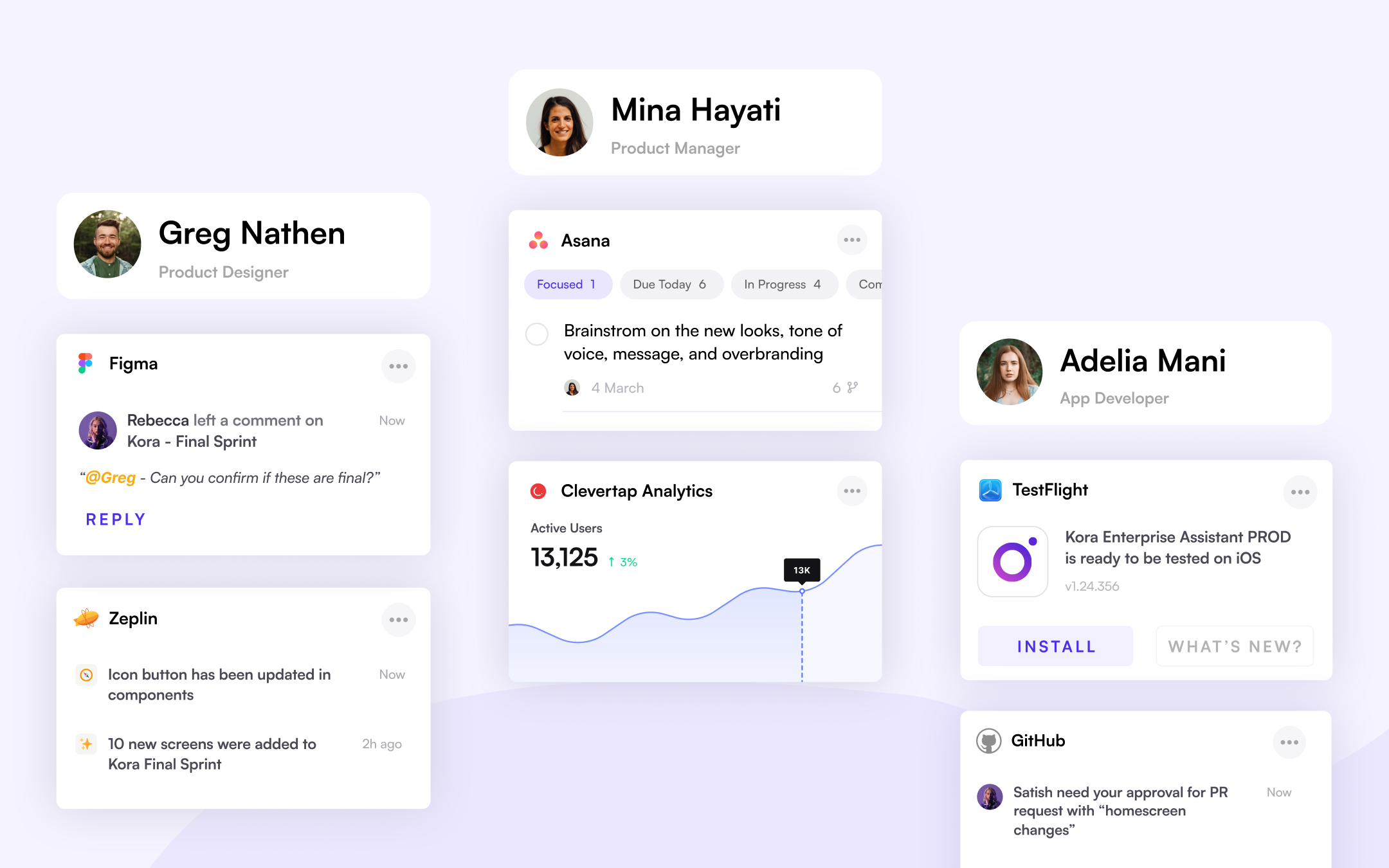
You no longer go to Apps — Apps come to you. Simply say what you need, and the right context appears. No switching tabs, no hunting for tools, no friction between thought and action.
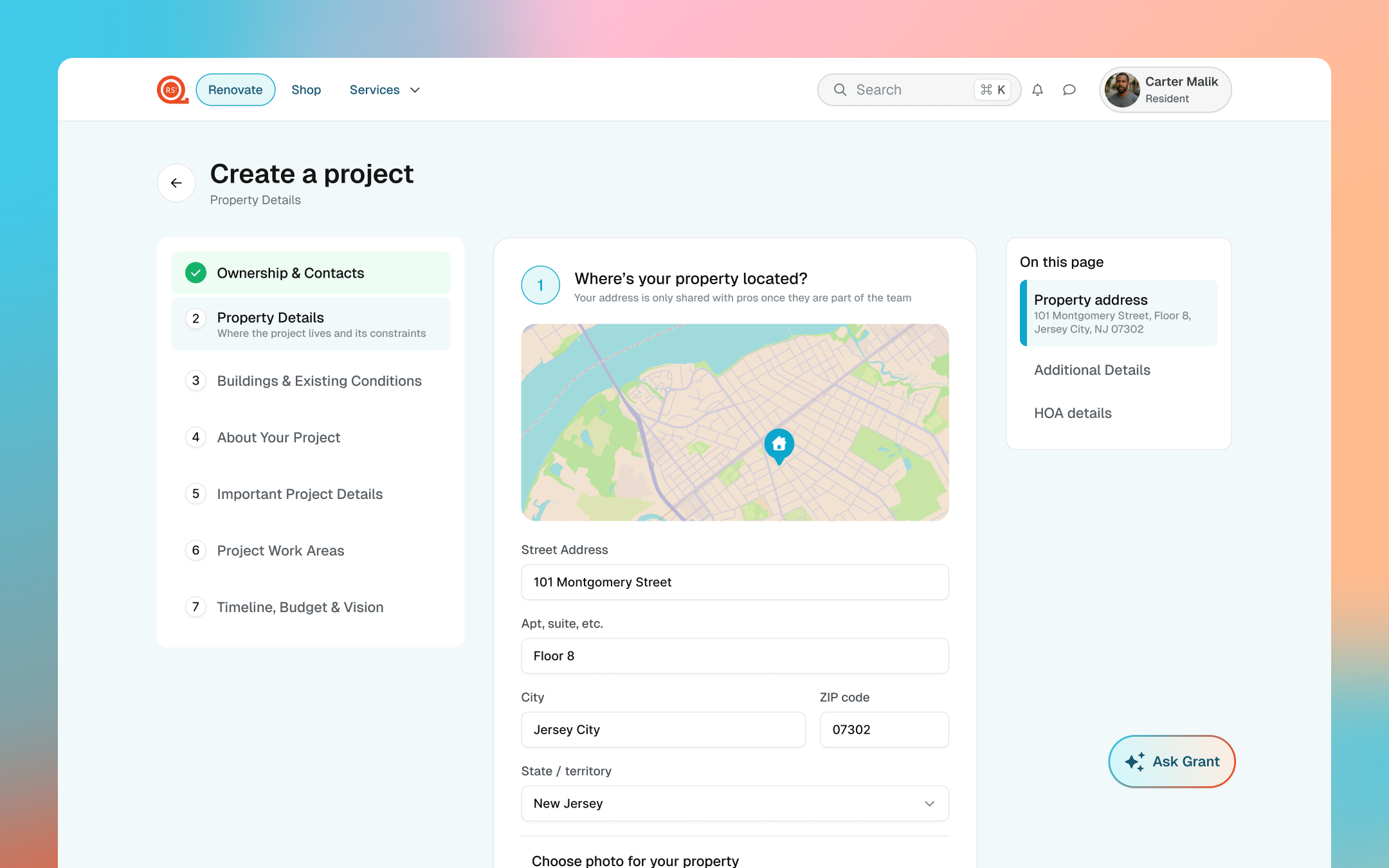
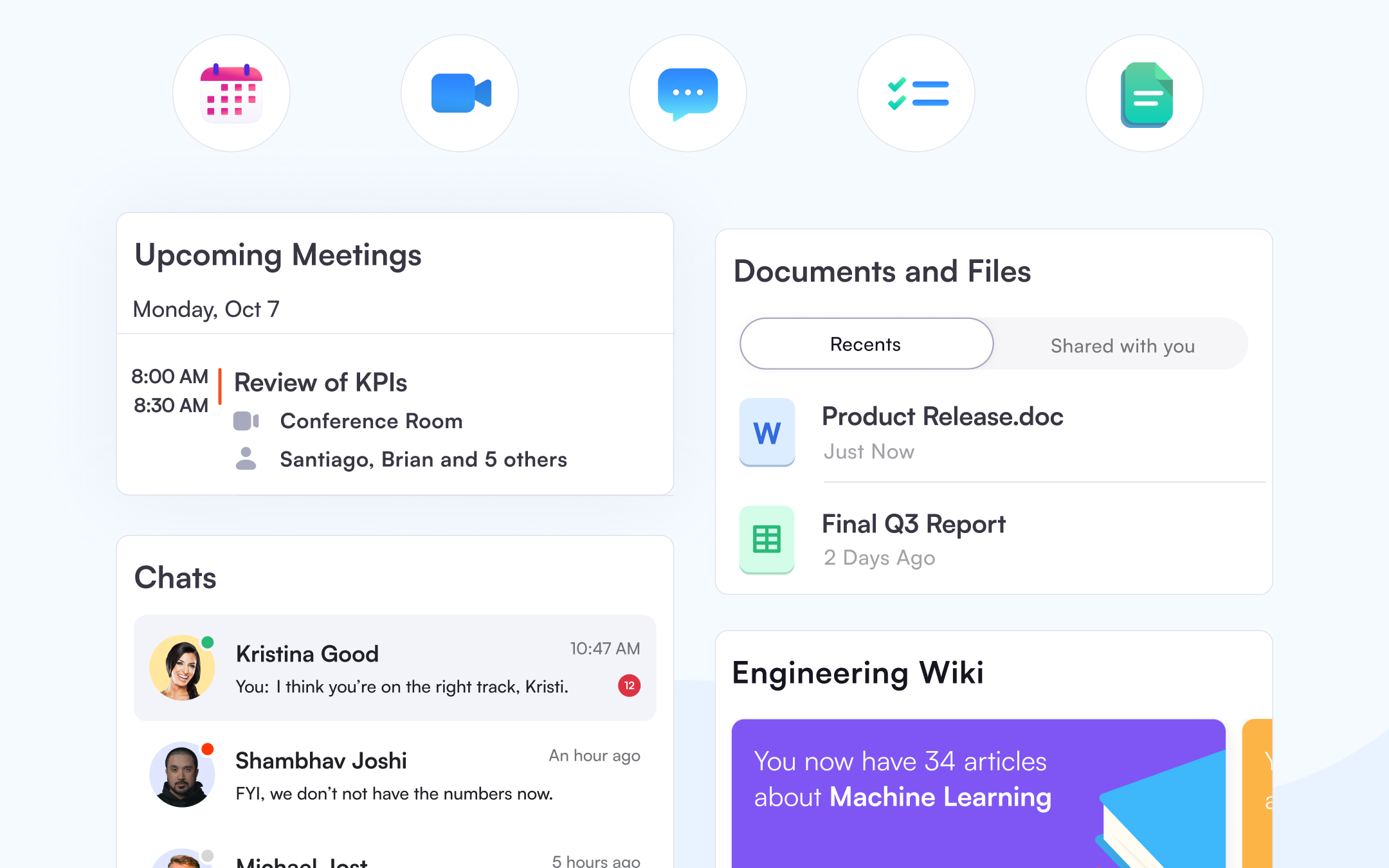
Design work covered the full product: the visual response engine that turns AI output into something you explore rather than read, the agent marketplace that eliminates setup friction, and the collaborative workspace where teams and AI operate side by side.
AI has a presentation problem. The technology has advanced enormously, but the interface hasn't: users still receive responses as unstructured text blocks they have to parse, organise, and act on themselves. The cognitive load is on the human, not the machine.
Kora was designed to invert that. The core premise is that an AI interface should be built around cognitive metaphors — spatial layouts, visual hierarchy, and interactive structure that allow information to be understood at a glance, not read line by line. Built for people who value their time and refuse to compromise on either capability or experience.
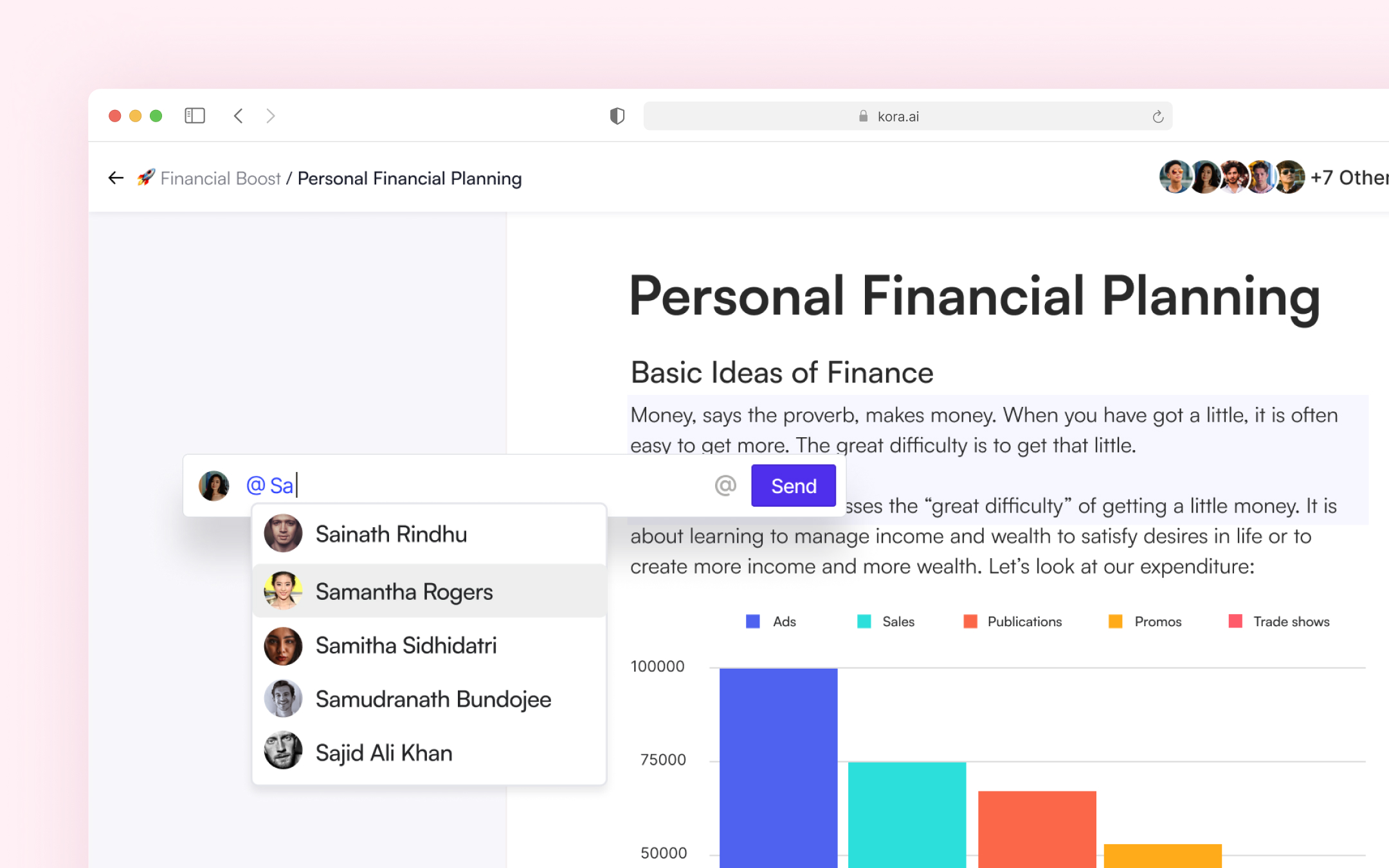
Designed for how we think — making computers an extension of the mind, not just the hands.
Visual Response Engine
The central design challenge was making AI output feel native to the way humans think, not the way language models generate text. A visual response system structures every AI answer as an interactive, spatially-organised layout — headings become navigable sections, data becomes scannable cards, relationships become visible connections. The user explores the answer rather than reads it. Early testing showed a 40% reduction in the time users needed to act on AI-generated information.
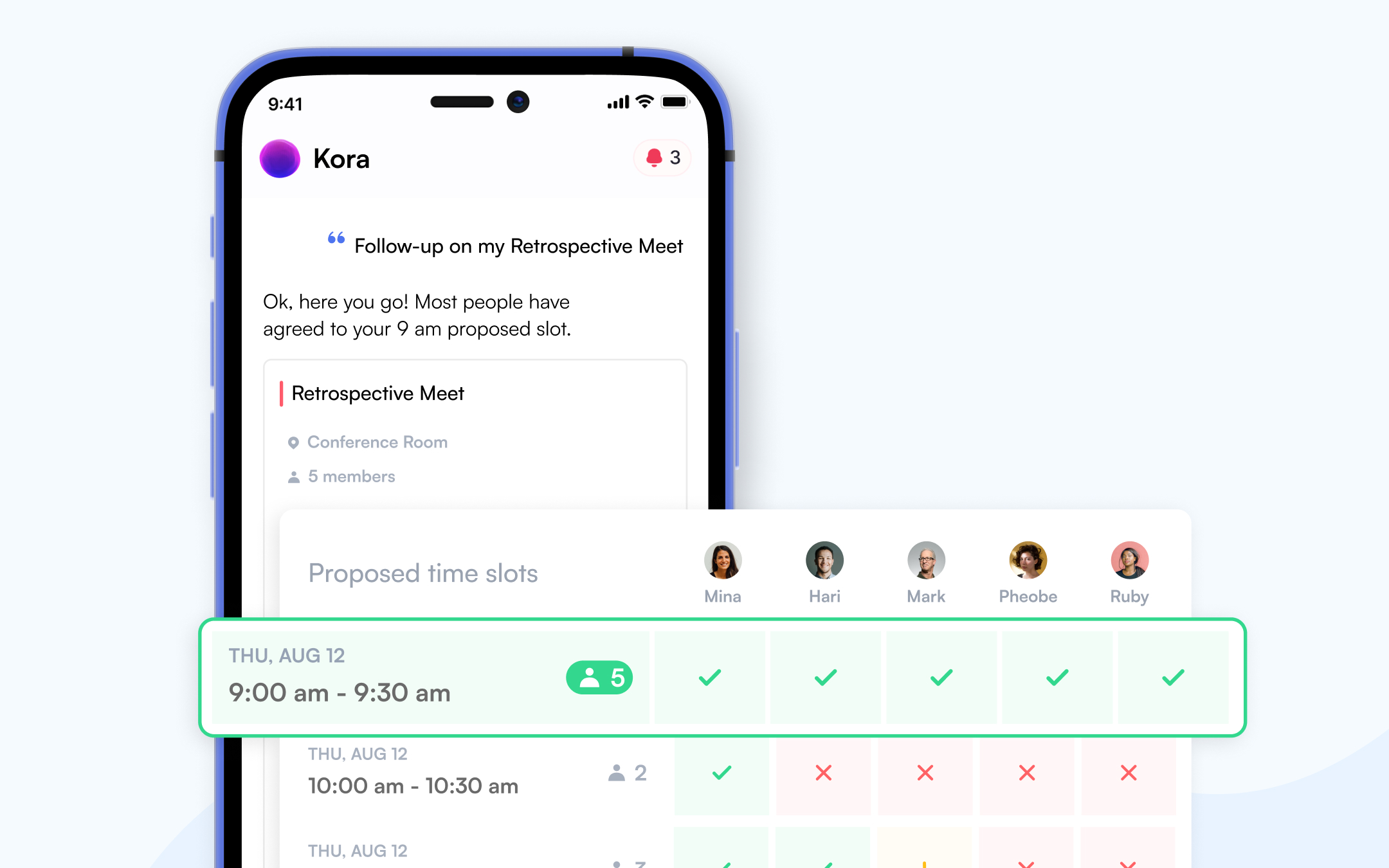
Agent Marketplace — Power Without Complexity
The agent marketplace was designed around a single principle: the user should never have to build a workflow. Pre-built agents are categorised by use case — not by technology — so a marketing team finds the same platform value as a legal team or a solopreneur. The integration layer connects agents to existing tools silently, surfacing confirmation rather than configuration.
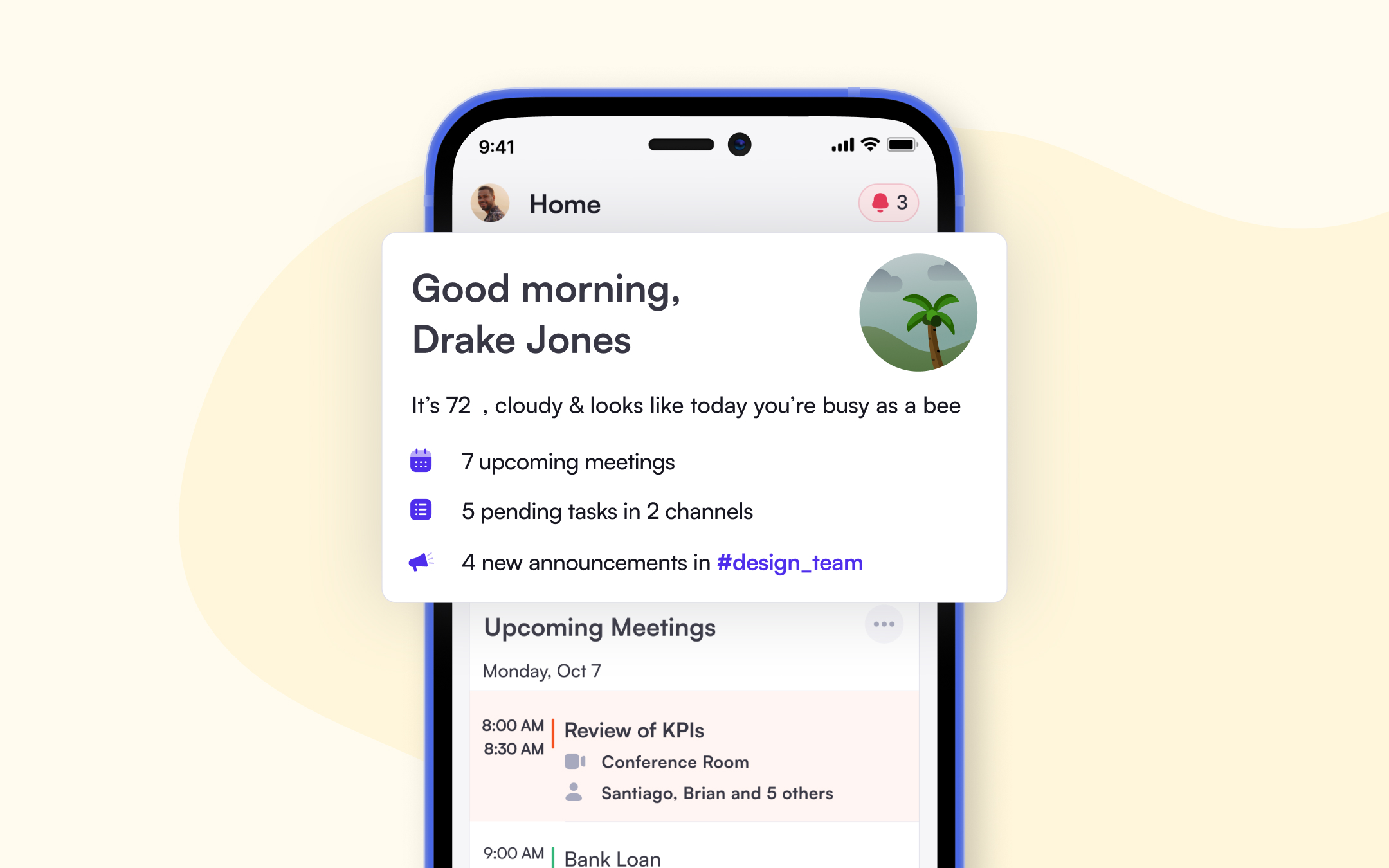
Unified Team and Agent Workspace
One of Kora's core propositions is that AI agents are collaborators, not tools. The collaborative workspace is designed so humans and agents share the same interface — threads, decisions, and outputs are attributed to their contributors whether human or AI. The Intelligent Day Widget surfaces exactly what each user needs at the moment they need it, learning from patterns without requiring manual configuration.
Kora doesn't just answer questions — it shows you how to think about them. That's a different product category entirely.
Kora
AI Platform